




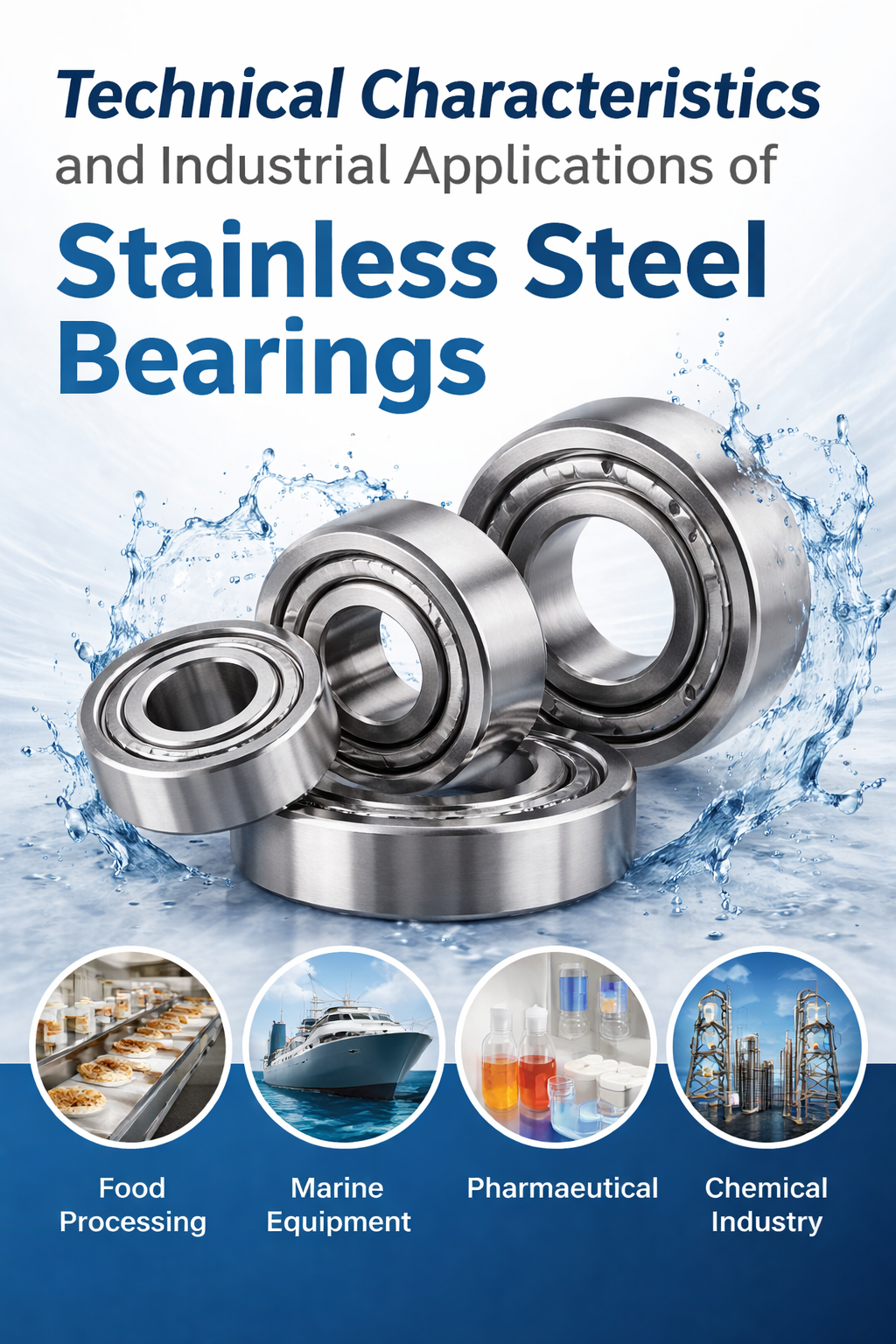
The technical characteristics of stainless steel bearings revolve around material and structural design. Their core advantage lies in corrosion resistance. Through the compositional properties of stainless steel, the risk of oxidation and rust is reduced in humid, acidic, and alkaline environments, making them suitable for various industrial needs. Simultaneously, stainless steel bearings possess a certain degree of high-temperature resistance, maintaining structural stability under high-temperature conditions and ensuring the continuous operation of the transmission system. Furthermore, some stainless steel bearings are manufactured using non-magnetic materials, meeting the needs of equipment sensitive to magnetic fields and preventing magnetic field interference from affecting equipment accuracy.
In industrial applications, stainless steel bearings are widely used in food processing equipment. Their corrosion resistance can withstand the humid environment of cleaning processes, ensuring hygiene requirements in production. In the medical device field, the low-pollution characteristics and corrosion resistance of stainless steel bearings meet the sterilization and aseptic operation requirements of medical equipment. In marine engineering equipment, stainless steel bearings can resist the corrosive effects of seawater, maintaining the stable operation of the transmission system of ships or offshore platforms. In chemical machinery, stainless steel bearings can withstand the erosion of acidic and alkaline media, ensuring continuous operation of production equipment. In precision instruments, non-magnetic stainless steel bearings can avoid magnetic field interference, maintaining the measurement accuracy of the instruments.
The technical characteristics of stainless steel bearings are highly compatible with the needs of industrial scenarios. Through the optimization of materials and structure, stable transmission is achieved in special environments, making them a key component for improving the reliability and adaptability of industrial equipment.
2026-01-14
